16 Best Places to Swim With Turtles Around the World
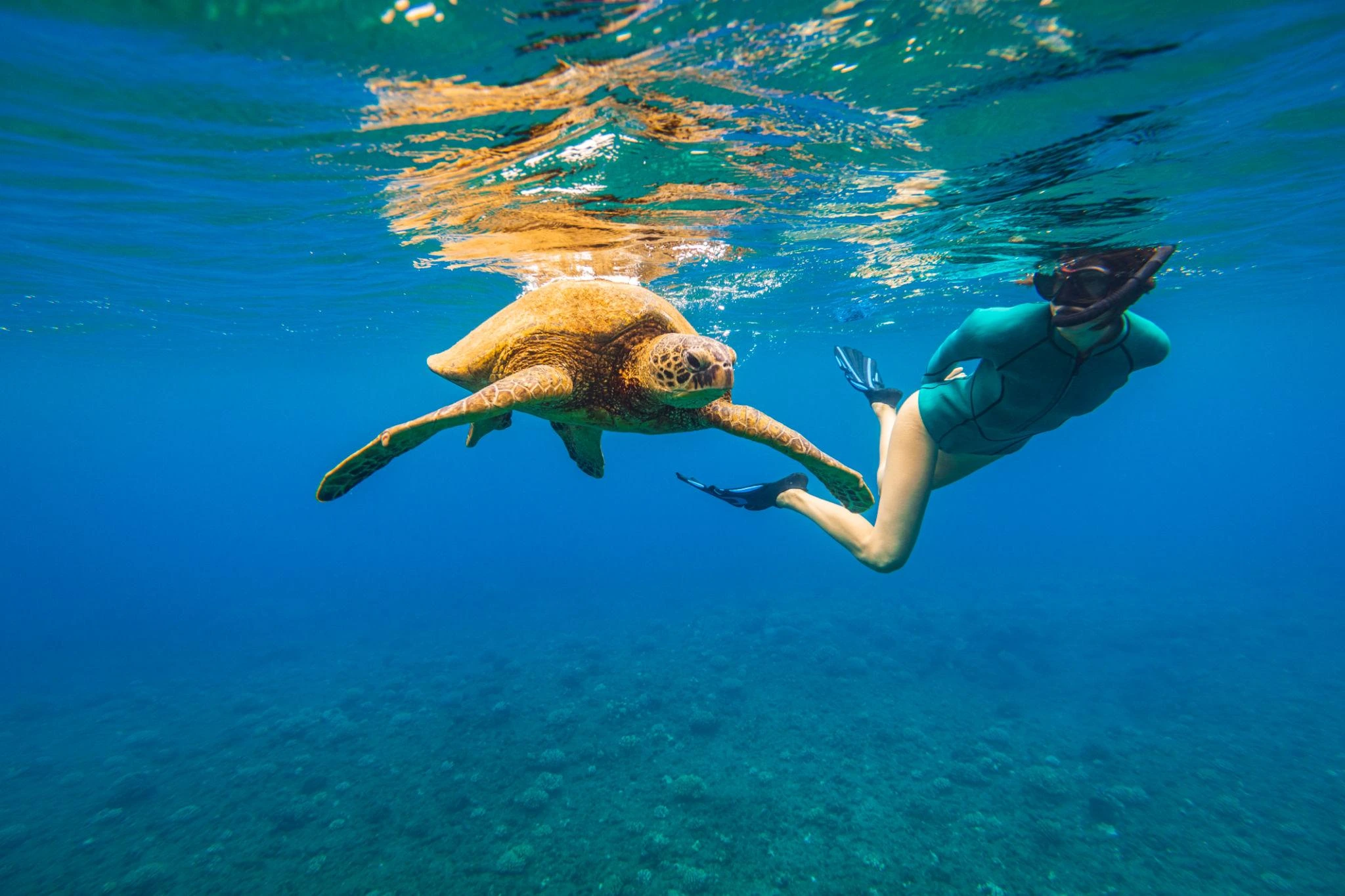
Swimming beside a sea turtle is one of those wildlife encounters that rarely feels ordinary, even after years of diving. The best places to swim with turtles combine healthy feeding grounds or reef habitat with reasonably predictable sightings—and several require little more than a mask and snorkel.
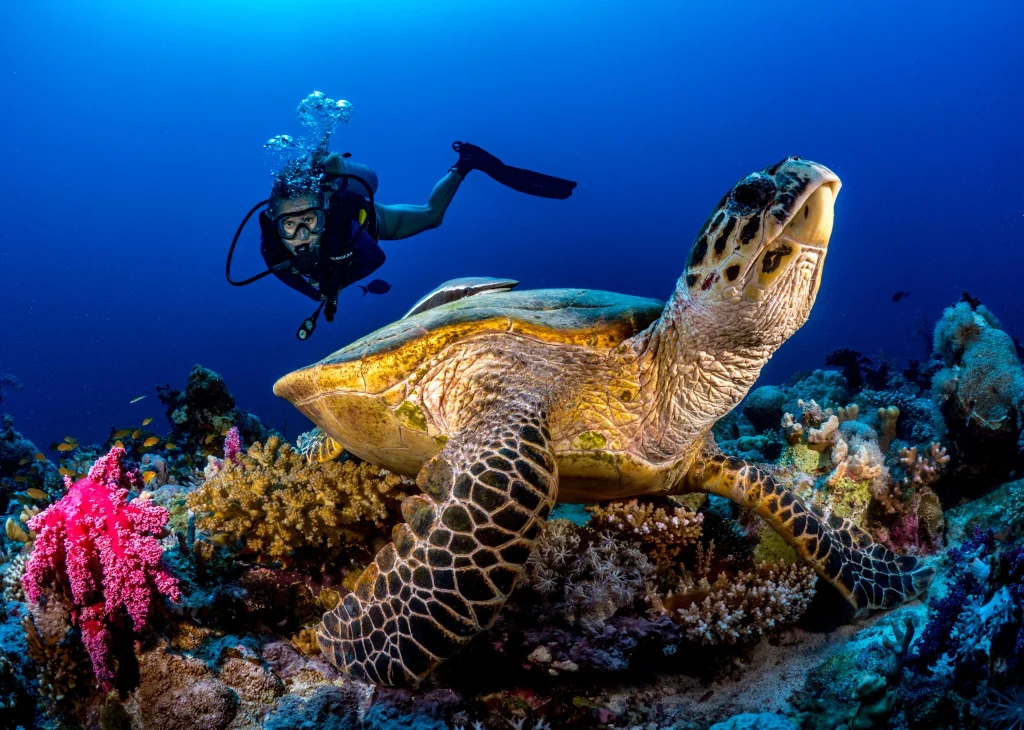
For easy snorkeling, Akumal, Maui, Marsa Alam and Fujairah stand out. Divers looking for frequent underwater encounters should put Sipadan, Bunaken and the Galápagos high on the list. And if nesting rather than swimming is the priority, Tortuguero and La Flor offer an entirely different turtle experience.
There are seven living species of sea turtle worldwide: green, hawksbill, loggerhead, leatherback, olive ridley, Kemp’s ridley and flatback. Where you travel determines which of them you are likely to encounter.
1. Akumal, Mexico — Best for Easy Turtle Snorkeling
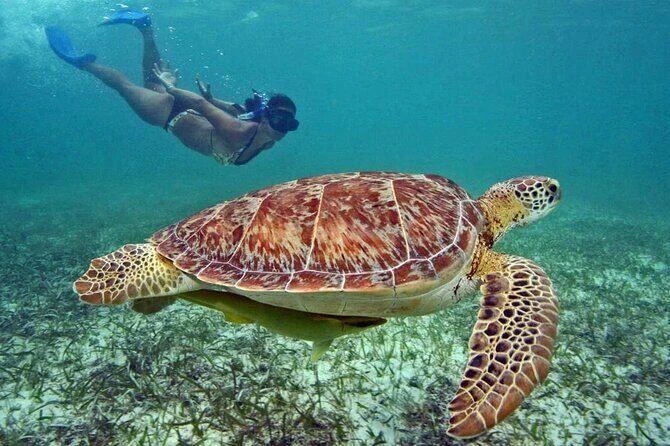
Akumal is one of the easiest places to understand why certain destinations become synonymous with turtles. Its name is commonly translated from Maya as “place of the turtles,” and green turtles regularly feed in the bay’s seagrass habitat.
The protected, relatively shallow water makes Akumal particularly attractive to snorkelers who do not have scuba certification. Rather than searching along a deep reef, visitors can encounter turtles feeding over the seagrass.
Access and wildlife-protection rules can change, and regulated swimming areas may require visitors to follow designated routes or local guidance. Check the current rules before entering the water rather than relying on an older trip report.
Best for: snorkeling and beginners
Common turtles: green turtles
Good period to consider: May to August, although turtles can be encountered outside this window
2. Maui, Hawaii — Best for Year-Round Vacation Snorkeling
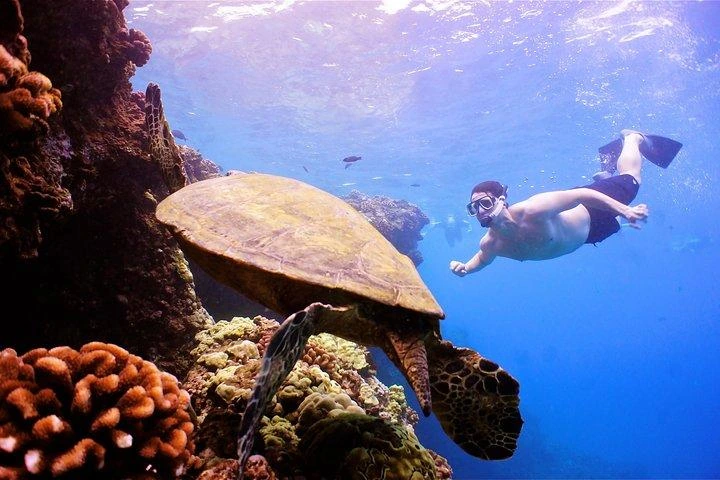
In Hawaii, the green sea turtle is known as honu, and Maui provides numerous opportunities to encounter one.
South and West Maui have reef and coastal habitats where green turtles feed, rest and surface to breathe. Snorkelers can find them in relatively accessible water, while scuba divers frequently encounter turtles around reef sites.
Hawaiian sea turtles are protected wildlife. Give them room both underwater and on shore, never block their path, and do not interpret a resting turtle’s lack of movement as permission to approach closely.
Maui works particularly well for travelers who want turtle encounters to be part of a broader beach or diving holiday rather than the sole purpose of the trip.
Best for: snorkeling, diving and family trips
Common turtles: green turtles; hawksbills are less commonly encountered
Good period to consider: year-round, with generally favorable ocean conditions varying by coast and season
3. Abu Dabbab, Marsa Alam, Egypt — Best for Seagrass Encounters
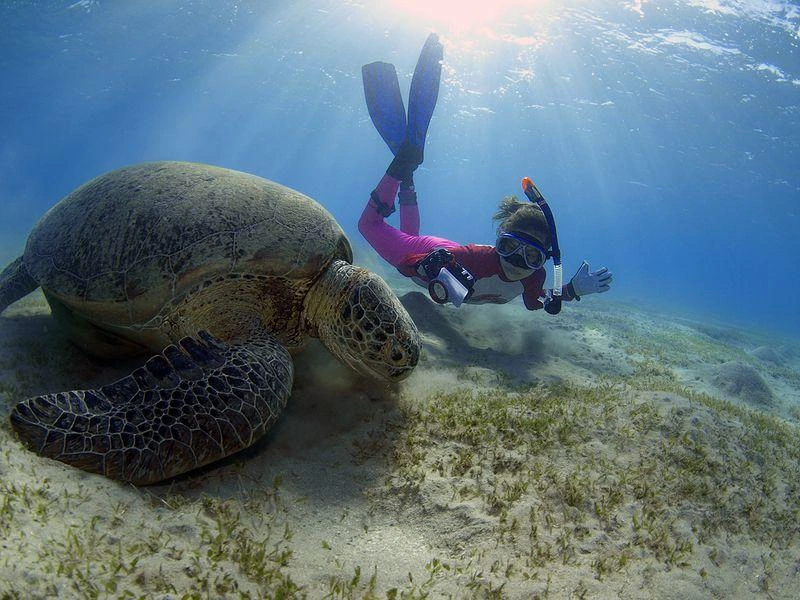
Abu Dabbab Bay is one of the Red Sea’s better-known places for encountering green turtles while snorkeling.
The reason is under your fins: seagrass.
Green turtles feed in the bay’s seagrass beds, so visitors do not necessarily need to make a deep dive to find them. Snorkelers can search the sandy and grassy areas while divers can combine turtle encounters with nearby reef life.
The area is also associated with occasional dugong sightings, although these should never be treated as guaranteed.
Hawksbill turtles are more closely associated with reef habitat, so exploring the coral areas can produce a different type of encounter.
Best for: shore snorkeling and recreational diving
Common turtles: green and hawksbill turtles
Good period to consider: much of the year; summer brings very warm conditions
4. Ari Atoll, Maldives — Best for Turtles Plus Big Marine Life
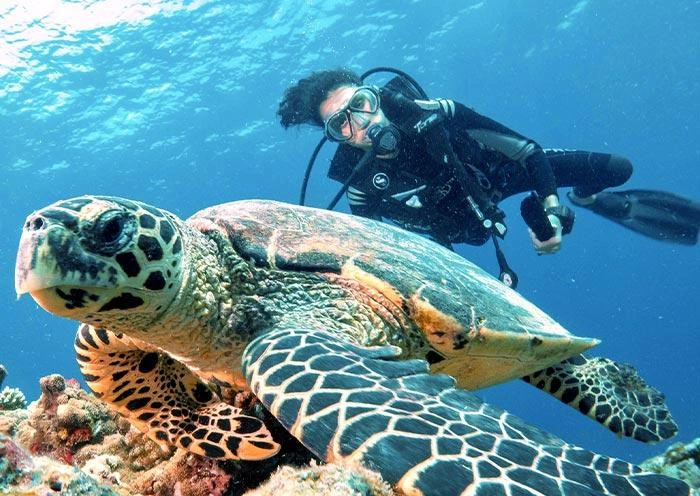
Ari Atoll offers something particularly attractive to underwater travelers: turtles are only one part of the experience.
Hawksbill turtles can be encountered around reefs where they forage, while green turtles are also present. Depending on the site and season, divers and snorkelers may simultaneously be planning trips around manta rays, whale sharks and tropical reef life.
Conditions vary considerably between individual islands, channels and reef sites. Some locations suit relaxed snorkeling; others involve currents better handled by experienced divers.
This is therefore less about finding one famous “turtle beach” and more about choosing an island or dive operation with regular access to productive turtle habitat.
Best for: combined snorkeling and dive vacations
Common turtles: hawksbill and green turtles
Good period to consider: turtles year-round; January to April often brings favorable conditions in many parts of the atoll
5. Sipadan, Malaysia — Best for Divers Who Want Lots of Turtles
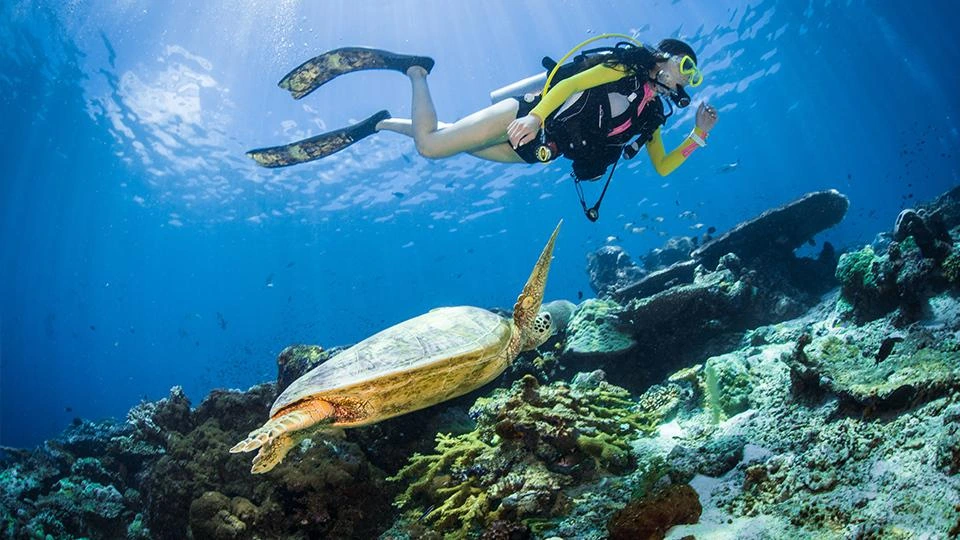
Sipadan belongs on a different kind of turtle list. You do not come here primarily for a relaxed beach snorkel—you come for serious diving in an extraordinarily rich marine environment.
Green and hawksbill turtles are regular reef residents, and multiple sightings on a dive are entirely realistic. They share the water with schooling barracuda, trevally, reef sharks and an enormous variety of reef fish.
Sipadan access is controlled through a permit system, so planning matters. The limited access is part of what distinguishes it from high-volume tourist snorkeling sites.
For a certified diver whose definition of the best turtle destination includes exceptional diving around the encounter, Sipadan is difficult to overlook.
Best for: experienced recreational divers
Common turtles: green and hawksbill turtles
Good period to consider: diving is possible year-round, with April to November often favored for conditions
When I compare turtle destinations for divers, I look beyond the possibility of seeing one animal. Sipadan stands out because turtles are woven into the dive rather than being the entire dive—you can be watching a green turtle one minute and a wall of barracuda the next.
6. Galápagos Islands, Ecuador — Best for a Wildlife Expedition
The Galápagos turns a turtle encounter into part of a much larger wildlife experience.
Green turtles occur throughout the archipelago and can be seen by both snorkelers and divers. Depending on the itinerary, they may appear alongside sea lions, rays, sharks, marine iguanas and dense schools of fish.
What makes the Galápagos different is not necessarily ease. Water temperature, currents and conditions can vary dramatically by site and season, and some of the archipelago’s famous dives demand substantial experience.
For snorkelers, protected bays and appropriate excursion sites can provide gentler encounters.
Travel here for the ecosystem rather than for a single guaranteed turtle photograph.
Best for: wildlife-focused divers and adventurous snorkelers
Common turtles: Eastern Pacific green turtles
Good period to consider: turtles occur year-round; seasonal conditions should be matched to the wider wildlife you want to see
7. Great Barrier Reef, Australia — Best for Variety
Six of the world’s seven sea turtle species have been recorded around the Great Barrier Reef region, making northeastern Australia one of the most important turtle areas on the planet.
Green turtles are particularly significant, while loggerheads and hawksbills are among the other species divers may encounter.
Because the Great Barrier Reef extends over an enormous area, “where should I swim with turtles?” is more useful than simply asking whether turtles occur there. Island reefs, outer-reef excursions and different sections of the marine park offer very different experiences.
Major nesting areas also occur within the broader reef system, although nesting beaches should be treated as wildlife habitat rather than swimming attractions.
Best for: snorkeling and scuba trips with broad marine-life diversity
Common turtles: green, loggerhead and hawksbill among several species
Good period to consider: year-round, with May to October popular for generally drier conditions
8. Bunaken Marine Park, Indonesia — Best for Reef and Wall Diving
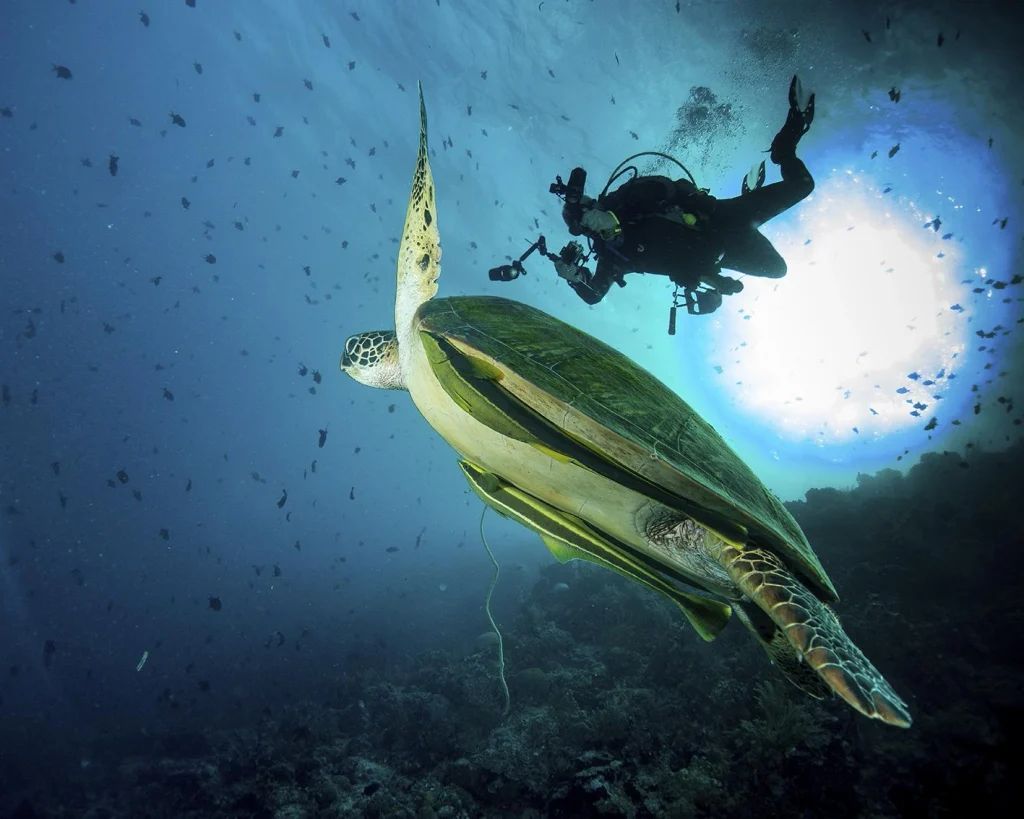
Bunaken is the sort of destination where a diver can stop counting turtles.
The marine park in North Sulawesi is known for steep walls, clear tropical water and healthy reef communities. Green turtles are especially common, with hawksbills also appearing around the reef.
Sites around Bunaken suit divers interested in long reef profiles rather than a staged turtle encounter. The animals are simply part of the ecosystem.
Currents and conditions vary by site, but the region offers diving across a broad experience range when sites are chosen appropriately.
Best for: reef and wall diving
Common turtles: green and hawksbill turtles
Good period to consider: year-round diving, with roughly May to October often offering favorable weather
9. Hol Chan Marine Reserve, Belize — Best for Caribbean Snorkeling
Just off Ambergris Caye, Hol Chan Marine Reserve combines seagrass, reef habitat and abundant Caribbean marine life.
Green and hawksbill turtles are among the animals snorkelers and divers may encounter, with loggerheads possible as well. Nurse sharks, rays and large numbers of reef fish add to the experience.
Hol Chan is particularly convenient because visitors do not need a dedicated dive expedition to reach productive marine habitat. Snorkeling excursions are widely accessible from Ambergris Caye.
Wild animals still decide whether they appear, so no responsible operator should promise a turtle on every trip.
Best for: Caribbean snorkeling and easy boat excursions
Common turtles: green and hawksbill; occasional loggerhead
Good period to consider: year-round, with seasonal weather affecting conditions
10. Kerama Islands, Okinawa, Japan — Best for Clear Water
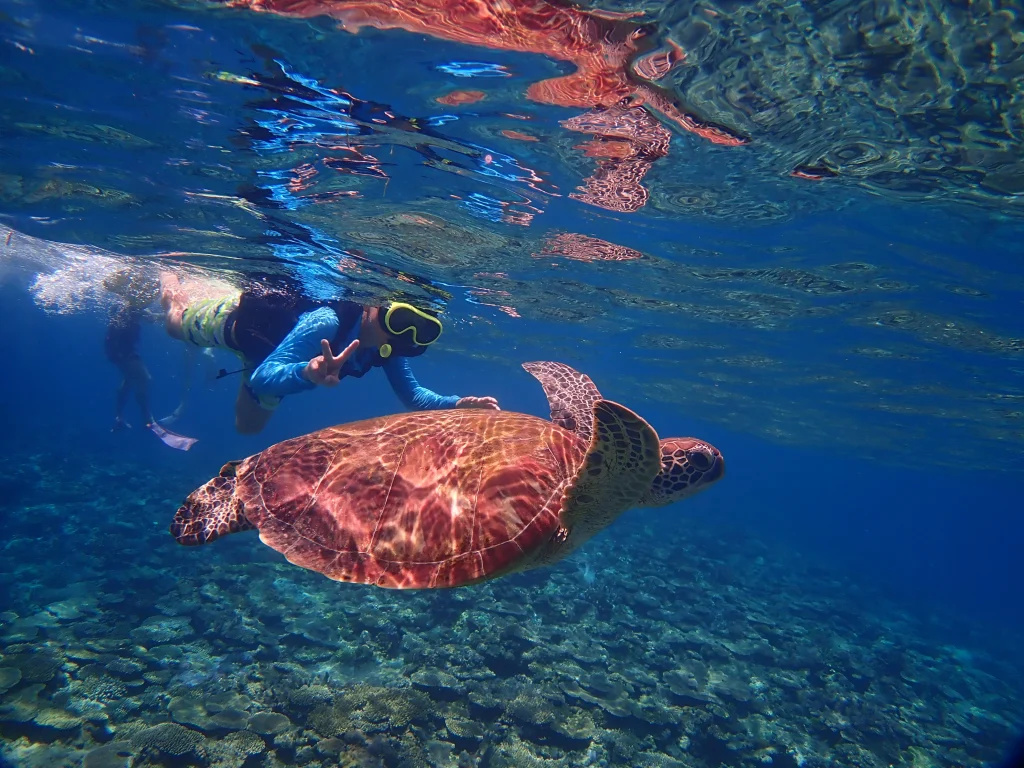
A short trip from Okinawa’s main island takes travelers into a very different side of Japan.
The Kerama Islands are known for remarkably clear blue water, coral reefs and encounters with green, hawksbill and loggerhead turtles. Both snorkeling and scuba diving are possible, depending on the site.
The combination of visibility and shallow reef habitat makes the islands especially attractive to underwater photographers, although currents need to be considered when selecting dive sites.
The wider Okinawa region also has seasonal marine-life attractions, making turtles one part of a broader subtropical itinerary.
Best for: snorkeling, diving and underwater photography
Common turtles: green, hawksbill and loggerhead
Good period to consider: May to October for warm conditions, while diving is possible beyond those months
11. Seychelles — Best for Tropical Island Hopping
The Seychelles offers classic turtle habitat: coral reefs, seagrass and remote tropical islands.
Green and hawksbill turtles are the species travelers are most likely to encounter while snorkeling or diving. Different islands provide very different levels of accessibility, from easy resort snorkeling to remote protected areas.
Aldabra Atoll is globally important for wildlife, but its remoteness and protected status make it very different from simply booking a snorkeling afternoon from a populated island.
For most visitors, the practical approach is choosing accessible islands with healthy reef habitat rather than planning around the archipelago’s most remote conservation areas.
Best for: island-hopping, snorkeling and diving
Common turtles: green and hawksbill turtles
Good period to consider: conditions vary between island groups; transition periods can offer calmer seas in some areas
12. Fujairah, United Arab Emirates — Best in the Middle East
Fujairah’s Gulf of Oman coastline provides one of the more accessible turtle-snorkeling options in the region.
Snoopy Island is particularly well known among snorkelers. Green and hawksbill turtles can appear around reefs and feeding areas alongside rays, reef fish, cuttlefish and occasional sharks.
It is possible to visit the area independently, but local conditions should always be checked before entering the water. Visibility and sea state are not identical throughout the year.
Fujairah is a useful choice for travelers based in the UAE who want a turtle encounter without building an entire international dive holiday around it.
Best for: accessible snorkeling and short dive trips
Common turtles: green and hawksbill turtles
Good period to consider: October to May for more comfortable air temperatures
13. Cook Island, Australia — Best for a Short Coastal Trip
Cook Island Aquatic Reserve lies off northern New South Wales, close to the Queensland border.
Green turtles are regular inhabitants, and the reserve also supports rays, wobbegongs and a variety of subtropical fish.
Unlike Australia’s major turtle nesting areas farther north, Cook Island is primarily interesting as an in-water encounter destination. Boat access and local sea conditions influence the experience considerably.
It can work well for travelers already visiting Australia’s east coast who want turtle snorkeling or diving without traveling all the way to the tropical northern reef systems.
Best for: snorkeling and diving
Common turtles: green turtles
Good period to consider: warmer months can be attractive, but local conditions matter more than a rigid turtle season
14. Baja California Sur, Mexico — Best for a Wider Marine Adventure
Baja California Sur is not a one-site turtle attraction. It is a huge marine region where turtles share the water with rays, sea lions, sharks, whales and enormous schools of fish.
Green, loggerhead and hawksbill turtles occur around the peninsula, with individual species and encounter rates varying by area.
Cabo Pulmo is one of the best-known diving areas because of its protected reef ecosystem, although travelers should choose Baja for its complete marine experience rather than expect turtles to dominate every dive.
Best for: divers planning a wildlife-heavy Mexico trip
Common turtles: green, loggerhead and hawksbill
Good period to consider: depends heavily on the specific area and target wildlife
15. Tortuguero, Costa Rica — Best for Watching Nesting Turtles
Tortuguero is included for a different reason.
The Caribbean coast of Costa Rica is internationally known for sea turtle nesting, especially green turtles. Leatherbacks and hawksbills also use the region.
This is primarily a nesting destination, not a conventional “jump in and swim beside turtles” recommendation.
Visits to nesting beaches are regulated, and travelers should follow authorized local procedures rather than searching independently for nesting females at night.
If seeing the turtle life cycle matters more to you than taking an underwater photograph, Tortuguero deserves a place near the top of the list.
Best for: responsible nesting observation
Common turtles: green, leatherback and hawksbill
Key seasons: vary by species; green turtle nesting is concentrated mainly in the second half of the year
16. La Flor Wildlife Refuge, Nicaragua — Best for an Arribada
La Flor Wildlife Refuge on Nicaragua’s Pacific coast is famous for arribadas—mass nesting events in which large numbers of olive ridley turtles come ashore.
Like Tortuguero, this is fundamentally a wildlife-observation destination rather than a snorkeling recommendation.
Arribadas are tied to natural cycles and cannot be scheduled like a theme-park show. Travelers need current local information and should follow refuge rules when viewing nesting turtles or hatchlings.
Best for: nesting and hatchling observation
Common turtles: olive ridley, with other species occurring
Key period: major nesting activity generally falls within the second half of the year
Which Turtle Destination Should You Choose?
There is no single best destination for everyone.
For first-time snorkelers, I would shortlist Akumal, Maui, Abu Dabbab and suitable sites in Fujairah. These offer relatively straightforward access to habitat where turtles are regularly encountered.
For certified divers, Sipadan and Bunaken are stronger choices if the quality of the diving matters as much as the turtles. The Galápagos is the bigger expedition, while the Great Barrier Reef offers exceptional geographic and species diversity.
For a Caribbean vacation, Belize is easy to combine with snorkeling, diving and island time.
And for travelers interested in turtle behavior rather than swimming, Tortuguero and La Flor offer the chance to witness nesting events that you simply cannot reproduce underwater.
My rule with turtle travel is simple: choose a destination you would still be excited to visit if you didn’t see a turtle on the first day. Wildlife encounters become much better trips when the reef, landscape and other marine life are worth the journey too.
How to Swim With Sea Turtles Responsibly
The best turtle encounter is one where the animal does not have to change its behavior because you arrived.
Never touch, hold, chase or ride a sea turtle. Do not swim directly over it when it is trying to surface, and never surround an animal with a group of swimmers.
Give turtles a clear route to the surface. They are reptiles and must breathe air.
Local wildlife regulations differ, so follow the rules at the destination even when they require a greater distance than you are accustomed to elsewhere.
A few habits work almost everywhere:
- approach slowly and avoid sudden pursuit;
- maintain a respectful distance;
- stay beside rather than directly above a turtle when possible;
- never block its route to the surface;
- do not feed turtles;
- keep fins and equipment away from coral and seagrass;
- avoid crowding an animal for photographs;
- follow instructions from park staff and responsible local guides.
If a turtle swims away from you, let it go.
Seeing Nesting Turtles and Hatchlings
Nesting requires even more restraint than an underwater encounter.
A female turtle coming ashore is performing an exhausting and vulnerable task. Noise, people, bright lights and physical obstruction can interfere with nesting behavior.
Use authorized viewing programs where required. Do not shine lights or camera flashes toward nesting turtles unless local conservation protocols explicitly allow a particular form of lighting.
Hatchlings should normally make their own journey from nest to ocean. Picking them up for a photograph or carrying them to the water can interfere with natural behavior and with managed conservation procedures.
If you unexpectedly discover nesting activity outside a monitored area, keep your distance and notify the appropriate local wildlife or conservation authority.
Can You Touch a Sea Turtle?
No. Treat sea turtles as wildlife, not as animals participating in an encounter.
Even when a turtle appears calm around snorkelers, touching is unnecessary and may be prohibited by local law. A turtle that remains still has not “given permission” to be handled.
The same applies to photography. There is rarely a reason to push closer simply to fill the frame.
A patient swimmer usually gets the better encounter anyway. Stay still, control your buoyancy and allow the animal to determine the distance.
When Is the Best Time to Swim With Turtles?
There is no worldwide turtle season.
Many tropical destinations have resident turtles that can be seen throughout the year. The “best time” often has more to do with visibility, currents, rainfall, water temperature and accessibility than with whether turtles exist in the area.
Nesting and hatching are different. Those events are strongly seasonal and vary by species and location.
This distinction matters when planning a trip. A destination’s nesting season does not automatically mean it is the best season for snorkeling with adult turtles.
If swimming is your priority, research local water conditions and recent sightings. If nesting is the goal, use current information from the protected area or conservation program because dates can shift from year to year.
What Sea Turtles Might You See?
Seven sea turtle species survive today:
- Green turtle (Chelonia mydas) — one of the species most commonly encountered by snorkelers in tropical seagrass and reef habitats.
- Hawksbill (Eretmochelys imbricata) — strongly associated with coral reefs and often seen feeding around sponges.
- Loggerhead (Caretta caretta) — a large, powerful turtle occurring across subtropical and temperate oceans.
- Leatherback (Dermochelys coriacea) — the largest sea turtle and a highly migratory species that is much less predictable for recreational snorkelers.
- Olive ridley (Lepidochelys olivacea) — famous for mass nesting events at certain beaches.
- Kemp’s ridley (Lepidochelys kempii) — the rarest sea turtle, concentrated mainly around the Gulf of Mexico and western Atlantic.
- Flatback (Natator depressus) — found primarily around northern Australia and nearby waters.
For most travelers deliberately planning a turtle snorkeling trip, green and hawksbill turtles are the species they are most likely to encounter at the destinations on this list.
Make the Encounter About the Turtle
Sea turtles survived long before recreational scuba diving, snorkeling tours and underwater cameras existed. Seeing one in open water is special precisely because the animal is living its normal life rather than performing for us.
Choose destinations with healthy habitat. Follow local wildlife regulations. Keep enough distance that the turtle can feed, rest, surface or swim away without having to negotiate around you.
Do that, and the best places to swim with turtles become more than locations for checking an animal off a travel list. They become opportunities to watch one of the ocean’s most recognizable animals on its own terms.
Sophie Callahan — marine wildlife travel writer specializing in responsible snorkeling and dive destinations