What Is the Longest Time Someone Has Held Their Breath?
Ethan Caldwell — freediving and breath-hold performance writer
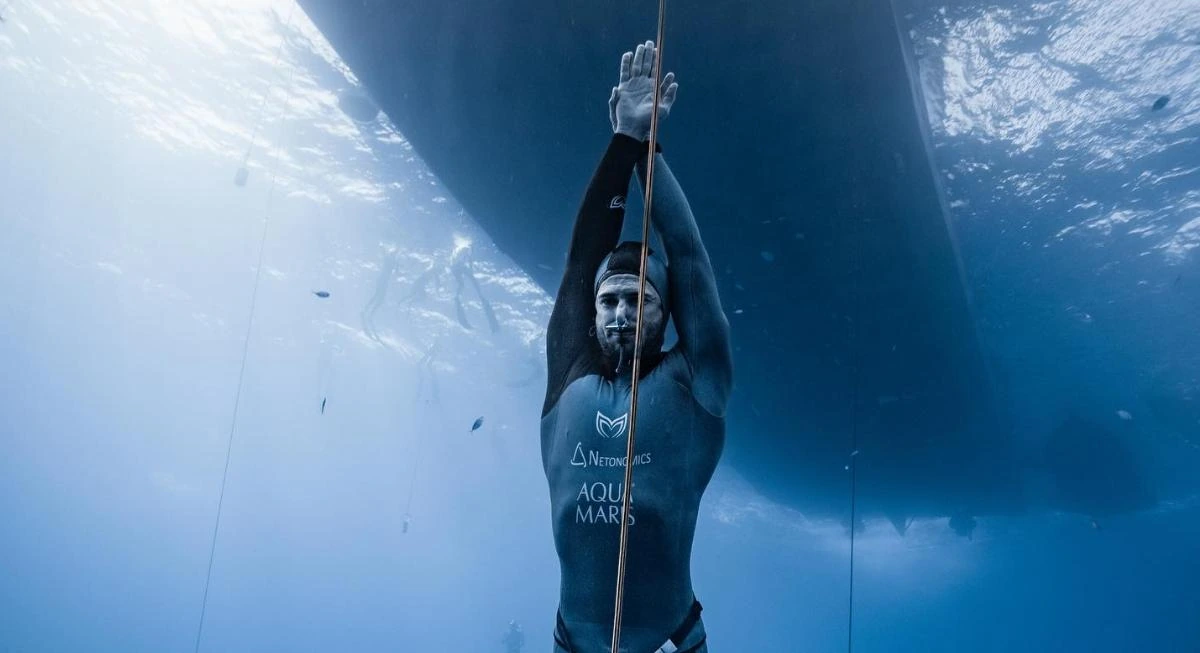
The longest breath held voluntarily underwater by a man is 29 minutes 3 seconds, achieved by Croatian freediver Vitomir Maričić on June 14, 2025. The extraordinary performance took place in Opatija, Croatia, and remains the Guinness World Record.
There is an important distinction, however: Maričić’s attempt allowed pure-oxygen breathing immediately before the breath-hold. It is therefore very different from competitive static apnea performed after breathing normal air.
For a conventional freediving comparison, the AIDA men’s static apnea world record is 11 minutes 35 seconds, held by French freediver Stéphane Mifsud.
That difference is essential to understanding what the 29-minute record actually represents.
How Long Is the World Record for Holding Your Breath?
As of 2026, Guinness lists Vitomir Maričić’s record at precisely 29 minutes 3.07 seconds.
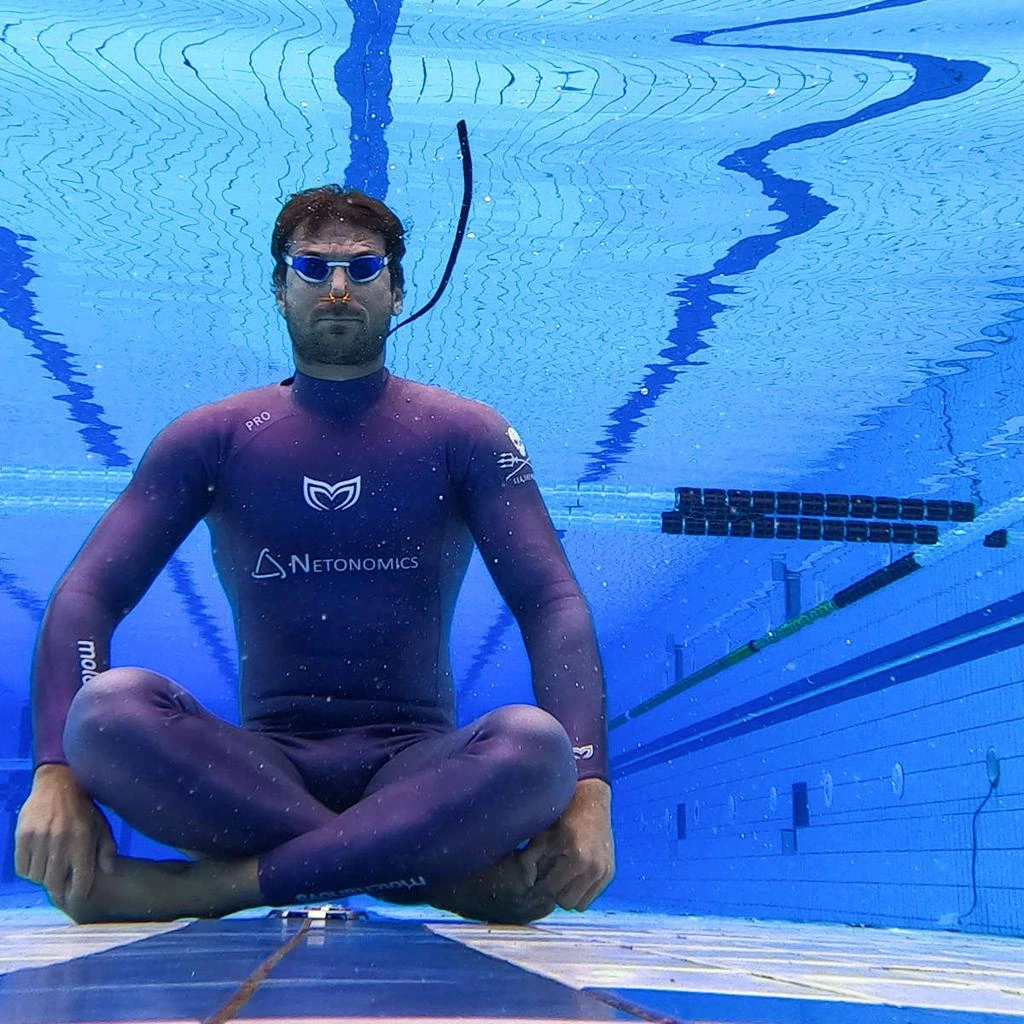
He completed the attempt in Croatia on June 14, 2025, breaking a record that had stood since 2021.
Maričić is an experienced competitive freediver rather than someone who appeared solely to attempt this unusual Guinness category. His freediving background includes competitive pool disciplines where athletes swim or remain stationary underwater on a single breath.
But the 29:03 performance belongs to a specialized record category with rules that differ substantially from standard competitive freediving.
The simplest comparison is:
| Record | Athlete | Time | Preparation |
| Guinness longest voluntary underwater breath-hold, male | Vitomir Maričić | 29:03.07 | Oxygen permitted |
| AIDA men’s static apnea world record | Stéphane Mifsud | 11:35 | Standard freediving rules |
So when someone asks, “What is the world record for holding your breath underwater?”, both numbers can appear online without either necessarily being incorrect. They describe different disciplines.
How Vitomir Maričić Held His Breath for 29 Minutes
Maričić’s record was performed as a static underwater breath-hold. The objective was not to swim farther or dive deeper but to minimize movement and remain underwater for as long as possible.
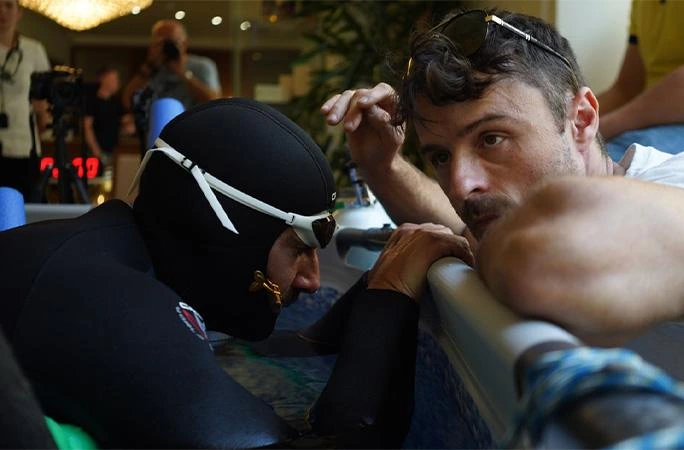
The critical element was oxygen preparation.
Before the timed attempt, Maričić breathed pure oxygen under the record’s permitted protocol. At the start of the attempt, his face was submerged and he remained essentially motionless while a support team monitored the performance.
That oxygen preparation changes the physiology of the breath-hold dramatically compared with beginning after breathing ordinary air.
Maričić ultimately stayed underwater for 29 minutes 3 seconds, surpassing the previous Guinness mark by more than four minutes.
He later described the physical challenge of prolonged diaphragm contractions while saying that the effort became mentally easier after passing the 20-minute point.
This was not a casual experiment. The record was performed with monitoring and experienced personnel present.
Why Breathing Oxygen Makes Such a Difference
Normal air contains roughly 21% oxygen, with nitrogen making up most of the remainder.
Breathing pure oxygen before a specialized breath-hold changes the amount of oxygen available to the body and removes much of the nitrogen from the lungs. This helps explain how oxygen-assisted records can extend dramatically beyond conventional static apnea performances.
The body still consumes oxygen continuously.
At the same time, carbon dioxide accumulates. Rising carbon dioxide is a major contributor to the increasingly powerful urge to breathe and the involuntary respiratory contractions familiar to trained freedivers.
Remaining relaxed also matters because unnecessary muscular activity increases metabolic demand.
This combination—oxygen preparation, minimal movement and exceptional breath-hold conditioning—helps explain the extraordinary duration.
It does not mean a person who can hold their breath for several minutes on air could simply breathe oxygen and safely multiply that time.
When looking at breath-hold records, I always check the rules before comparing the numbers. A 29-minute oxygen-assisted apnea and an 11-minute-plus competitive static apnea are remarkable performances, but physiologically and competitively they are not the same event.
Who Held the Record Before Vitomir Maričić?
The previous Guinness record belonged to another Croatian freediver, Budimir Šobat.
In 2021, Šobat recorded 24 minutes 37.36 seconds. That remained the benchmark until Maričić’s 2025 attempt.
One of the best-known earlier holders was endurance performer and magician David Blaine. In 2008, Blaine held his breath underwater for 17 minutes 4 seconds during a televised performance.
The progression illustrates how dramatically this specialized record has advanced.
Guinness traces the male underwater voluntary breath-hold record back to American Robert Foster, who achieved 13 minutes 42.5 seconds in 1959. More than six decades later, Maričić pushed the mark beyond 29 minutes.
What Is the Longest Breath Hold Without Pure Oxygen?
This is where competitive freediving becomes the more useful comparison.
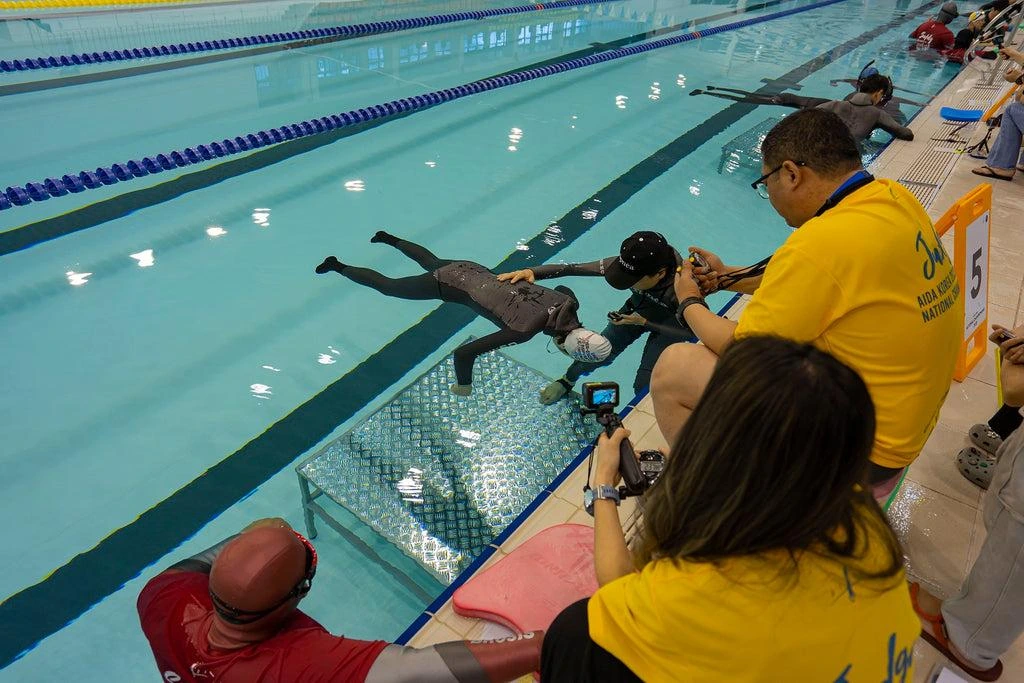
In static apnea, or STA, a freediver remains motionless while holding a single breath. Unlike the oxygen-assisted Guinness record discussed above, competitive AIDA static apnea does not use a period of pure-oxygen breathing to produce a 20- or 30-minute attempt.
The current AIDA men’s world record is 11 minutes 35 seconds, achieved by French freediver Stéphane Mifsud.
Eleven and a half minutes might appear modest beside 29 minutes, but comparing them directly is misleading. The starting conditions are fundamentally different.
Static apnea is also only one freediving discipline. Others measure horizontal distance or depth rather than elapsed time.
Maričić himself is accomplished in conventional freediving disciplines, which makes his oxygen-assisted record particularly interesting: the performance combined an unusual Guinness protocol with skills developed through competitive apnea.
Why Can Trained Freedivers Hold Their Breath So Long?
Elite freedivers are not simply people with unusually large lungs.
Several physiological and behavioral factors influence apnea performance.
When the face is immersed and breathing stops, humans exhibit elements of the mammalian diving response. Heart rate can decrease, while circulation is adjusted to prioritize critical organs.
Trained freedivers also become accustomed to the discomfort associated with rising carbon dioxide and respiratory contractions.
Relaxation is equally important. Every unnecessary movement requires energy and oxygen. Static specialists therefore try to reduce muscular effort and remain calm throughout the performance.
Experience also helps athletes recognize changes occurring during an apnea. That should not be confused with immunity to hypoxia.
A highly trained freediver can still lose consciousness when oxygen falls too low.
Is Holding Your Breath for a Long Time Dangerous?
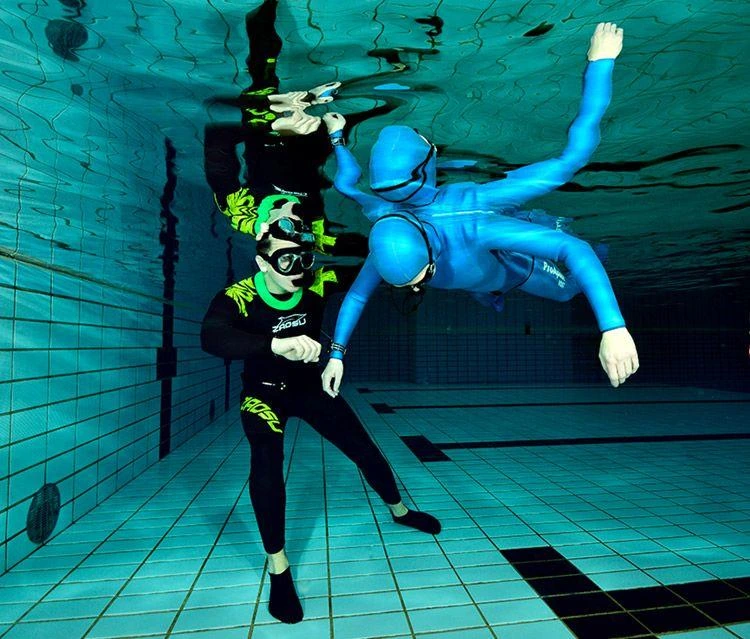
Yes. Extreme breath-holding can be dangerous, particularly in water.
As oxygen levels decline, a person can lose consciousness. Underwater, unconsciousness creates an immediate drowning risk.
One of the particularly dangerous aspects is that the urge to breathe and the body’s available oxygen are not a simple countdown clock. Manipulating breathing beforehand can alter carbon-dioxide levels and reduce normal warning sensations without making an underwater attempt safe.
For that reason, extreme records should not be treated as instructions for recreational divers or swimmers.
Do not practice prolonged underwater breath-holding alone, and do not attempt to reproduce oxygen-assisted records independently.
The number that matters to a recreational swimmer is not 29:03 or 11:35. The important distinction is that record performances take place under specialized protocols with safety personnel; copying the visible part of the attempt without that framework removes the very safeguards that make organized apnea possible.
Does Hyperventilating Let You Hold Your Breath Longer?
This is an important misconception because it can become dangerous around water.
Hyperventilation can lower the concentration of carbon dioxide in the blood. Since increasing carbon dioxide contributes strongly to the sensation that tells you to breathe, reducing it can postpone that warning.
But hyperventilation does not provide a proportionate increase in the body’s oxygen reserves.
A swimmer can therefore become dangerously hypoxic before experiencing the expected urge to breathe. Loss of consciousness underwater can occur with little useful warning.
This is one reason breath-hold challenges should never be approached as a contest among untrained swimmers.
Pure-oxygen preparation for an officially supervised record is also not the same thing as recreational hyperventilation. They should not be treated as interchangeable techniques.
Could Someone Hold Their Breath for 30 Minutes?
Maričić’s 29:03.07 record leaves the 30-minute threshold less than a minute away, so it is reasonable to wonder whether someone will eventually cross it.
There is no reliable way to predict when or whether that will happen.
Records depend on the rules of the category as well as human performance. Even small changes in protocol can make comparisons between achievements misleading.
What can be said is that 29 minutes is already far outside normal breath-holding ability and even far beyond elite static apnea when performed without oxygen assistance.
For most readers asking what is the longest time someone has held their breath, the clearest answer is therefore:
Vitomir Maričić holds the Guinness male underwater voluntary breath-hold record at 29 minutes 3.07 seconds, achieved in Croatia on June 14, 2025, using permitted oxygen preparation.
For conventional competitive static apnea, the benchmark to remember is different: Stéphane Mifsud’s AIDA men’s world record of 11 minutes 35 seconds.
Understanding that distinction makes both performances more impressive—not less.