Nitrox Diving: How Enriched Air Works, Its Benefits and Its Limits
Ryan Mercer — recreational scuba training writer specializing in enriched-air diving and dive planning
Nitrox diving lets recreational divers breathe a gas containing more oxygen and less nitrogen than ordinary compressed air. The practical benefit is straightforward: at the same depth, a diver generally absorbs nitrogen more slowly, which can extend the no-decompression limit (NDL) or provide a more conservative nitrogen exposure.
The trade-off is equally important. More oxygen means a shallower maximum operating depth (MOD), because oxygen becomes hazardous as its partial pressure rises. Nitrox is therefore a tool for managing nitrogen exposure and dive time—not a gas for simply going deeper.
For divers considering an enriched air certification, understanding that balance is the key to understanding nitrox.
What Is Nitrox?
Standard breathing air contains approximately 21% oxygen and 79% nitrogen, with small amounts of other gases. Enriched air nitrox, usually abbreviated EAN or EANx, contains a higher percentage of oxygen and consequently a lower percentage of nitrogen.
Two mixes are especially common in recreational diving:
- EAN32 or Nitrox 32: approximately 32% oxygen
- EAN36 or Nitrox 36: approximately 36% oxygen
A cylinder containing EAN32 therefore has substantially less nitrogen than a cylinder filled with ordinary air.
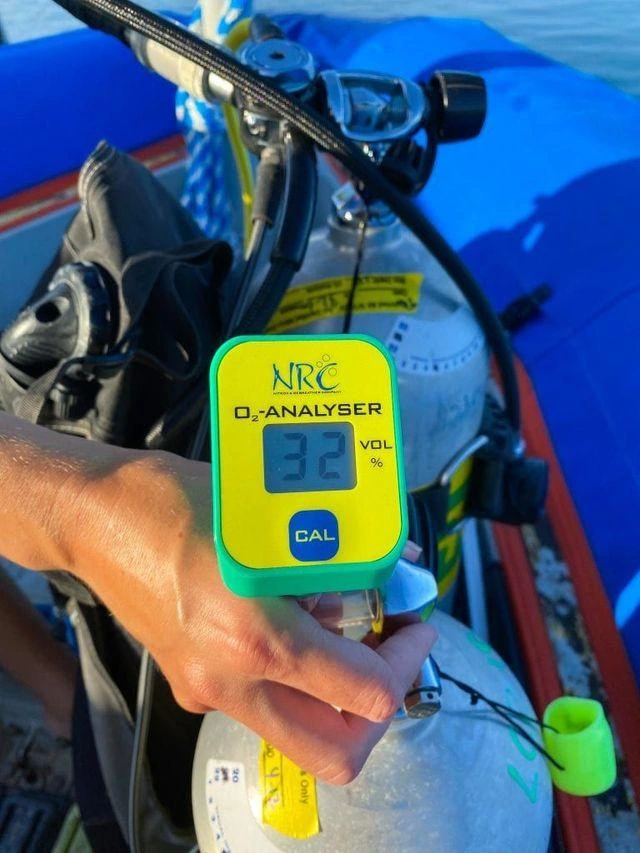
Recreational nitrox training commonly covers enriched-air mixtures up to 40% oxygen. Higher-oxygen gases also have applications in technical diving, particularly during decompression, but their planning, handling and use go beyond basic recreational nitrox procedures.
The important point is that the extra oxygen is not there because a recreational diver needs more oxygen to breathe. The advantage comes primarily from replacing some of the nitrogen.
Nitrox vs. Air: What Changes Underwater?
Pressure causes nitrogen from a diver’s breathing gas to dissolve into body tissues. The deeper the dive and the longer the exposure, the more relevant that nitrogen loading becomes.
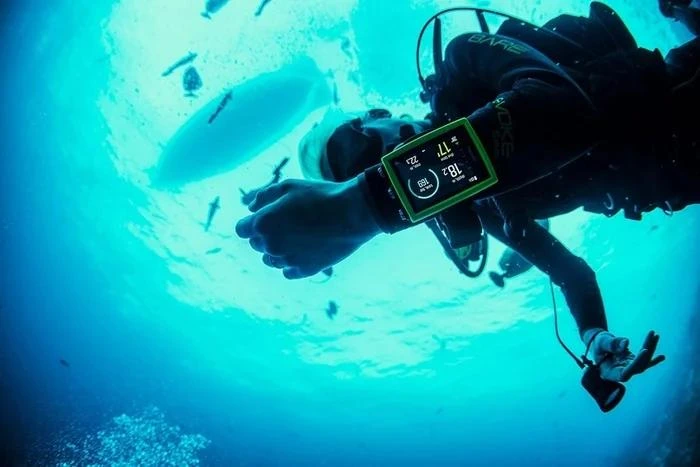
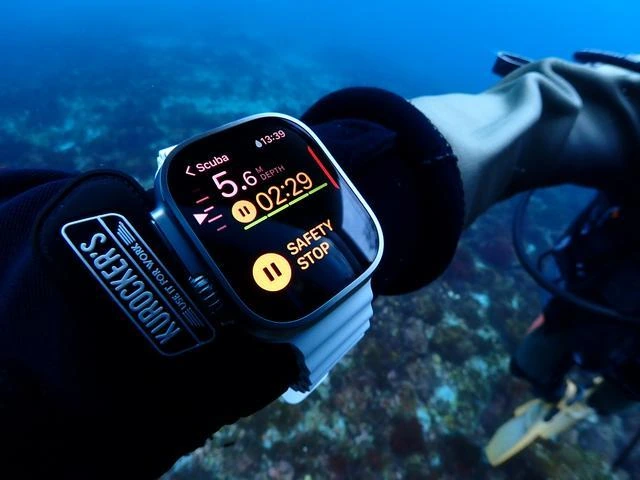
Dive tables and computers model this process to establish no-decompression limits. Stay within those limits and, under normal recreational procedures, you can ascend without mandatory decompression stops, although a safety stop is still commonly performed.
Because nitrox contains less nitrogen, the theoretical nitrogen loading at a given depth is lower than it would be when breathing air.
Consider EAN32. At the same depth and for the same amount of time, a diver breathing EAN32 is exposed to a lower nitrogen partial pressure than a diver breathing air. A nitrox-capable computer accounts for this when calculating the dive.
This can produce a noticeably longer NDL, particularly at moderate recreational depths.
It does not mean decompression sickness becomes impossible. DCS risk never reaches zero, and factors beyond the selected breathing gas can influence decompression stress.
Why Divers Use Nitrox
The biggest advantage of nitrox becomes apparent on dives where the no-decompression limit would otherwise restrict useful bottom time.
That makes enriched air particularly attractive for repetitive diving. A diver making three or four dives from a liveaboard or dive boat may find that reduced nitrogen exposure provides considerably more flexibility than air, depending on depth and profile.
Underwater photographers often appreciate the same advantage. If the subject is sitting on a reef at a depth where the NDL becomes restrictive, additional available no-stop time can be much more valuable than it would be on a shallow sightseeing dive.
There is another way to use the reduced nitrogen fraction: conservatism.
Instead of using nitrox to remain underwater until the longer nitrox NDL is nearly exhausted, a diver can maintain a more conservative profile. The breathing gas then provides reduced nitrogen exposure compared with performing an equivalent profile on air.
In practical dive planning, this is the distinction I want divers to understand first: nitrox gives you options. You do not have to convert every extra minute of theoretical NDL into another minute on the bottom.
When Nitrox Makes the Most Sense
Nitrox is not equally useful on every dive.
On a shallow dive, your cylinder may be approaching the planned reserve pressure long before nitrogen loading becomes the limiting factor. A longer NDL offers little practical benefit if gas supply already determines when you ascend.
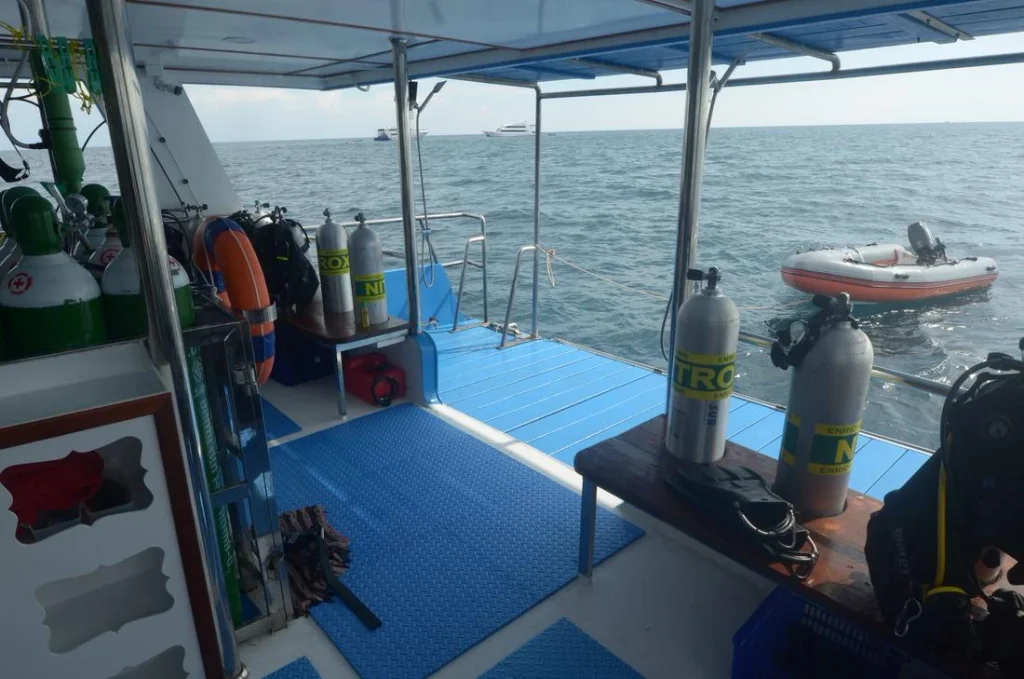
At moderate depths, the equation changes. This is where recreational nitrox often becomes especially useful because air NDLs become shorter while common enriched-air mixes can still remain within their MOD.
Repetitive dives can make the difference more noticeable. This is why nitrox is common on liveaboards, multi-dive boat trips and dive vacations where divers may enter the water several times a day.
The correct mix still depends on the planned depth. A higher oxygen percentage is not automatically a better mix.
Maximum Operating Depth
The most important limitation in nitrox diving is the maximum operating depth, or MOD.
As a diver descends, ambient pressure increases. The percentage of oxygen in the cylinder does not change, but the partial pressure of that oxygen does.
At sufficient pressure, elevated oxygen exposure can affect the central nervous system and potentially cause CNS oxygen toxicity. A convulsion underwater is particularly dangerous because it can result in loss of the regulator and drowning.
A commonly used maximum PO₂ for the working portion of recreational nitrox dives is 1.4 ATA. Current NOAA guidance also uses 1.4 ATA as a normal nitrox exposure limit, and this remains a widely taught planning value in recreational diving.
Using that limit, EAN32 reaches an MOD of roughly 111 feet / 34 meters, while EAN36 reaches approximately 95 feet / 29 meters.
Those depths demonstrate why nitrox should never be described as a gas for going deeper. Increasing the oxygen fraction makes the MOD shallower.
Calculating MOD
For seawater measurements in feet, a common MOD calculation is:
MOD = [(PO₂ limit ÷ oxygen fraction) − 1] × 33
For EAN32 at a PO₂ of 1.4:
[(1.4 ÷ 0.32) − 1] × 33 ≈ 111 feet
In metric calculations, 10 meters is used instead of 33 feet, producing approximately 34 meters.
Your training procedures, dive computer settings and actual analyzed gas should govern the dive. A memorized MOD is not a substitute for verifying the cylinder.
Oxygen Toxicity and Nitrox
Oxygen is essential for life, but elevated oxygen partial pressure can become toxic.
For nitrox divers, the immediate concern is usually central nervous system oxygen toxicity. Possible symptoms associated with excessive oxygen exposure can include visual or hearing disturbances, nausea, dizziness, twitching, confusion and convulsions.
The difficulty is that a seizure can occur without a reliable warning sequence.
Risk also does not depend solely on a single PO₂ number. Exposure time, exertion, carbon dioxide retention, individual susceptibility and environmental conditions can matter.
This is why the MOD should be treated as a genuine depth limit rather than a target depth with a few spare feet available below it.
If your planned dive approaches the MOD of the selected gas, changes in depth deserve close attention.
Analyze Your Gas Before Diving
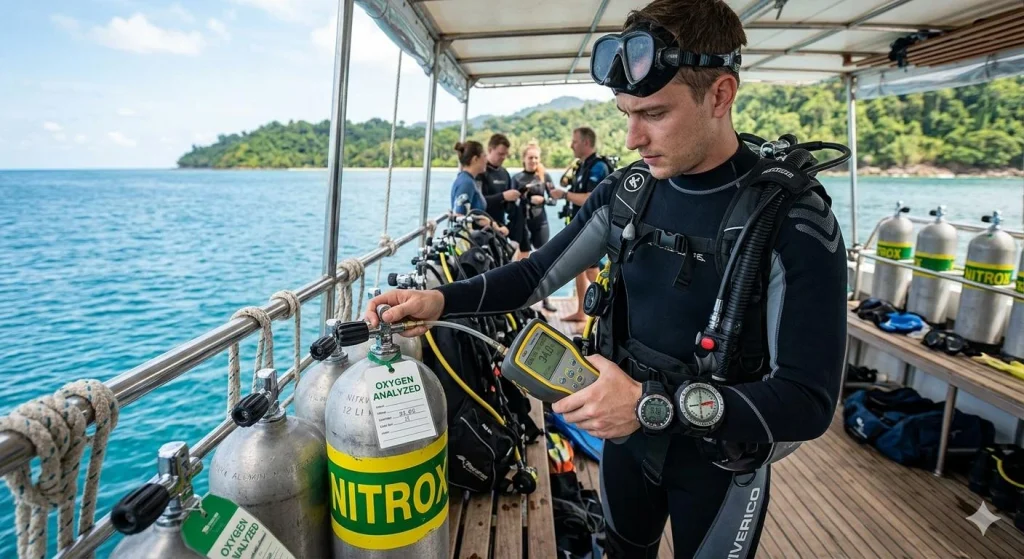
A nitrox label tells you what a cylinder is intended to contain. It does not replace analysis.
Procedures vary somewhat among training systems and certification levels, but analyzing or verifying the oxygen fraction is a fundamental part of safe enriched-air use. The measured percentage determines the MOD and the settings used by your dive computer.
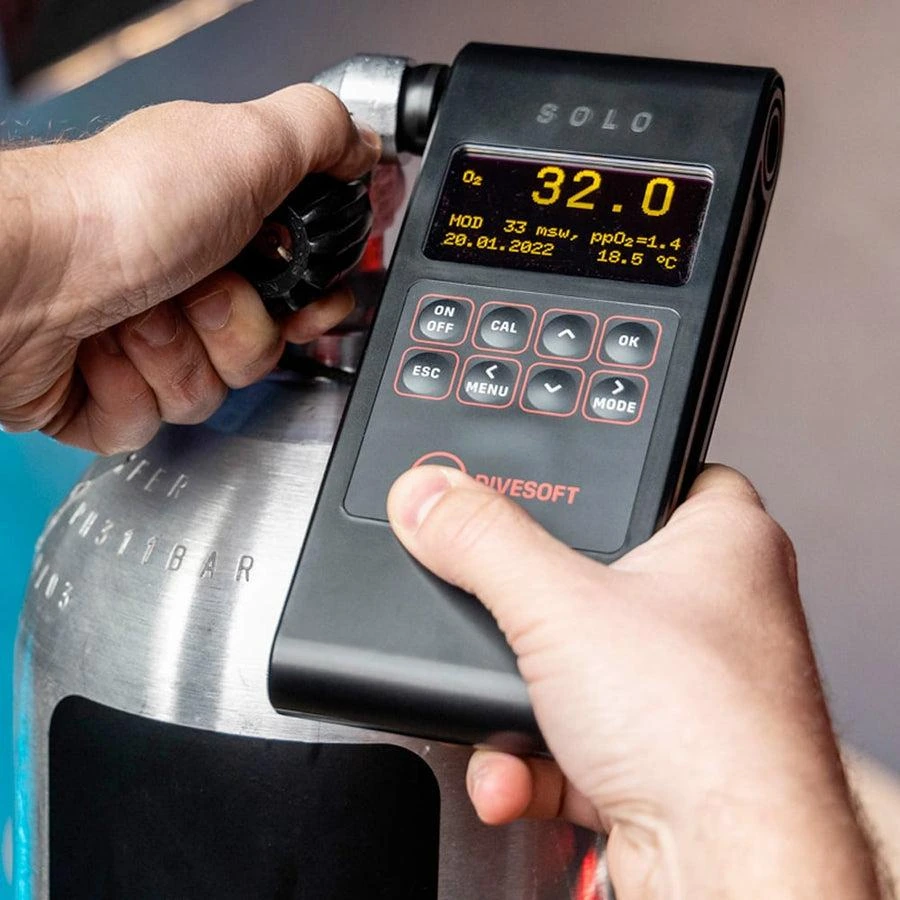
A typical pre-dive process includes confirming the oxygen percentage, establishing the MOD, identifying the cylinder and ensuring that the computer is configured for the actual breathing gas.
A computer accidentally left on the wrong oxygen percentage can calculate an inappropriate decompression profile or display an incorrect oxygen exposure.
The same principle applies when a dive operation routinely provides EAN32. Never assume that a familiar cylinder marking makes verification unnecessary under the procedures you were trained to follow.
On a busy dive boat, gas analysis can feel like one more task between assembling equipment and entering the water. I treat it as part of the dive itself: know what’s in the cylinder, know its MOD, then set the computer.
Equivalent Air Depth
Before nitrox-capable dive computers became commonplace, Equivalent Air Depth (EAD) was an especially important planning tool.
EAD expresses the nitrogen exposure from a nitrox mix as an equivalent depth when breathing air.
Suppose a diver uses nitrox at a particular depth. Because the mix contains less nitrogen than air, the diver’s nitrogen exposure can correspond to breathing air at a shallower depth. That equivalent depth can then be used with appropriate air-based planning tables when the method is supported by the diver’s training.
Modern nitrox computers perform the relevant modeling automatically after the oxygen fraction is entered correctly, so most recreational divers do not calculate EAD during routine dives.
The concept remains useful because it explains why nitrox extends NDLs: the body is exposed to a lower nitrogen partial pressure.
Does Nitrox Reduce Decompression Sickness Risk?
Nitrox can reduce nitrogen uptake compared with air when the same dive profile is followed.
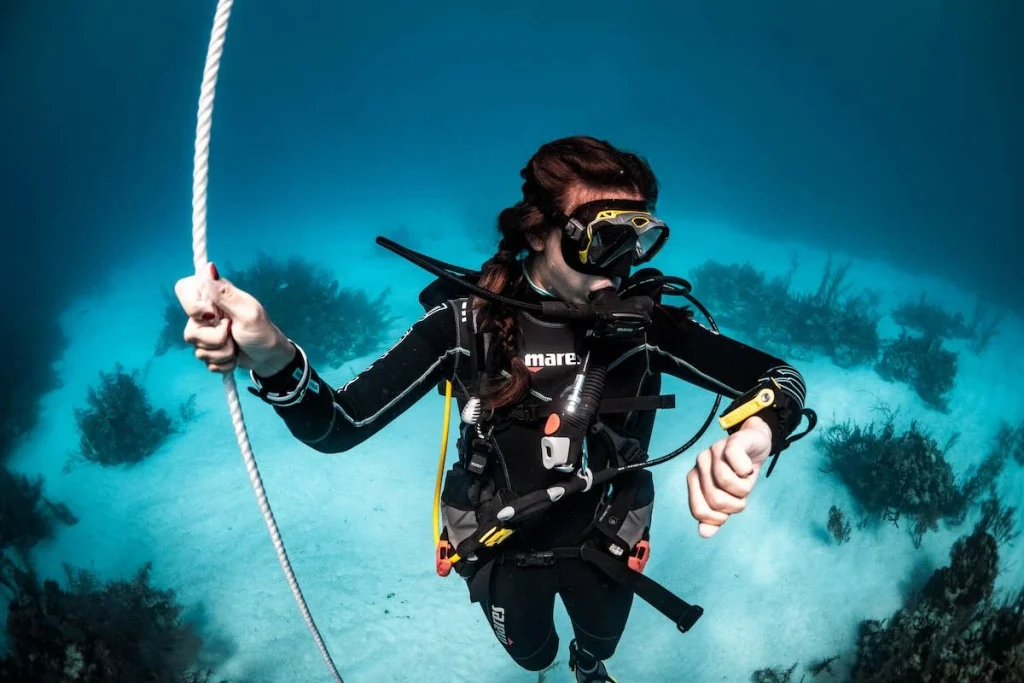
That does not create immunity from decompression sickness.
If a diver uses the reduced nitrogen exposure simply to extend the dive to the new nitrox limit, much of that additional margin is being used to obtain more bottom time. If the diver instead follows a more conservative profile, nitrox can provide an additional buffer relative to the equivalent air dive.
Neither approach makes DCS impossible.
Hydration, exertion, thermal stress, ascent behavior, repetitive exposure and individual physiology can all be relevant to decompression stress. Nitrox should be viewed as one part of dive planning rather than protection against every decompression problem.
What Nitrox Does Not Do
Enriched air has accumulated several persistent myths.
Nitrox does not let you dive deeper
This is the opposite of how enriched air works. More oxygen means the oxygen partial-pressure limit is reached at a shallower depth.
Technical divers may carry high-oxygen nitrox mixes, but those gases are generally used at appropriate shallower depths during ascent or decompression rather than during the deepest portion of the dive.
Nitrox does not meaningfully reduce gas consumption
Your breathing rate is not determined simply by how much oxygen exists in the cylinder.
Gas consumption depends on factors including depth, workload, breathing pattern, physical condition, equipment and stress. Switching from air to EAN32 does not suddenly make the same cylinder last dramatically longer.
Nitrox is not a reliable solution for narcosis
Replacing some nitrogen with oxygen should not be treated as a dependable strategy for preventing narcosis. More importantly, the depths at which narcosis becomes a concern can conflict with the MOD of common recreational nitrox mixtures.
Feeling less tired is not guaranteed
Some divers report feeling better after nitrox dives. Others notice no difference.
Subjective post-dive fatigue is influenced by many variables, and nitrox should not be selected on the assumption that it will reliably eliminate tiredness after diving.
Nitrox Equipment and Cylinders
For recreational enriched-air mixes, much ordinary modern scuba equipment may be suitable within manufacturer-specified oxygen limits. Requirements can differ by equipment maker, region, fill method and oxygen concentration, so the manufacturer’s instructions and the procedures taught in your nitrox course take priority.
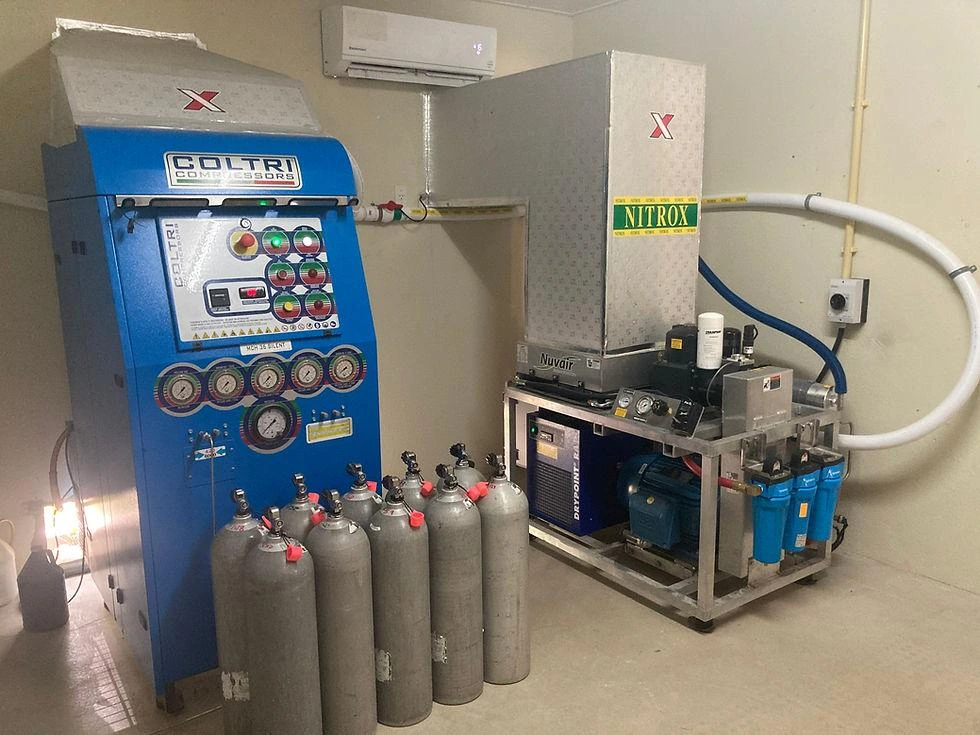
Cylinder preparation deserves particular attention.
Some blending methods expose a cylinder or valve to very high concentrations of oxygen during filling, even if the final breathing mix contains much less. Equipment exposed to high-concentration oxygen may require oxygen-compatible components, lubricants and cleaning procedures.
That is one reason divers should not improvise with filling practices or assume that every air cylinder can simply be treated as a nitrox cylinder.
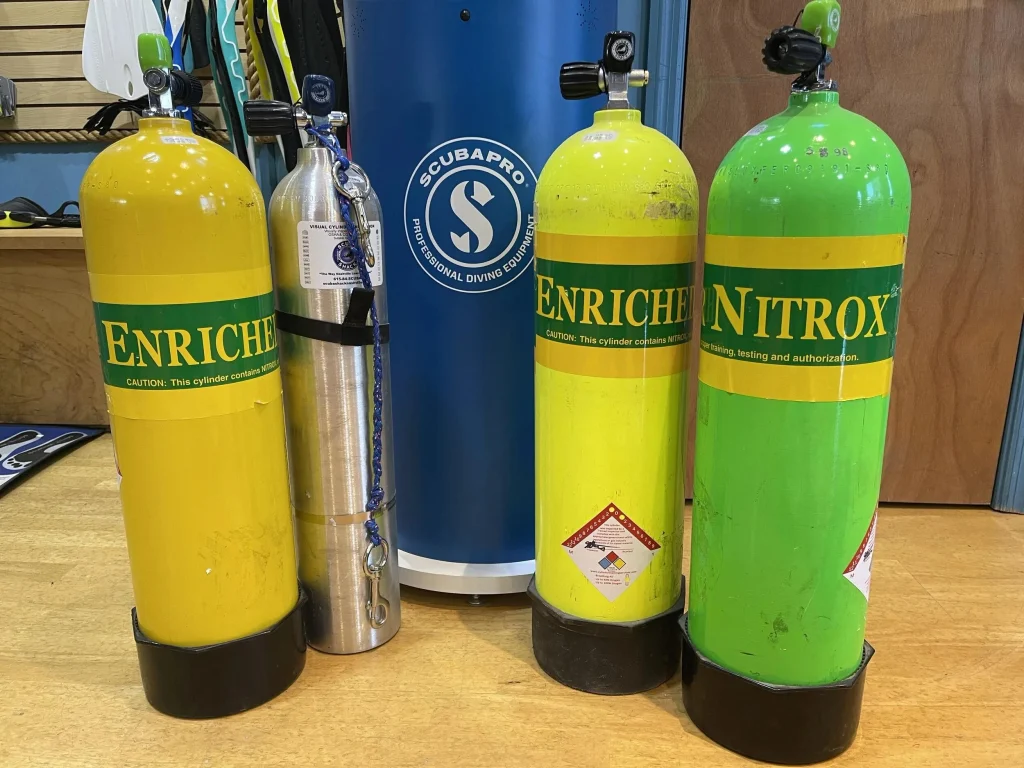
Nitrox cylinders also need clear identification and gas-content information so that the breathing mix cannot easily be mistaken for ordinary air.
Nitrox Certification
A recreational nitrox course teaches more than the definition of EAN32.
Training normally covers oxygen exposure, MOD, gas analysis or verification procedures, cylinder identification, dive-computer configuration and planning dives around the actual oxygen percentage being used.
Certification requirements vary among training agencies, but nitrox training is widely available and usually does not require complicated in-water skills. Much of the important work happens before entering the water.
That simplicity should not be mistaken for optional knowledge. The consequences of using the wrong mix at the wrong depth can be serious.
If you have not been trained to use enriched air, complete an appropriate nitrox diving certification before independently planning and conducting nitrox dives.
Useful Nitrox Terms
EAN / EANx: Enriched Air Nitrox, meaning a nitrogen-oxygen breathing mixture containing more oxygen than ordinary air in the recreational context.
FO₂: Fraction of oxygen in a gas. EAN32 has an FO₂ of 0.32.
PO₂ or PPO₂: Partial pressure of oxygen.
MOD: Maximum Operating Depth—the deepest planned depth at which a breathing mix stays within the selected oxygen partial-pressure limit.
NDL: No-Decompression Limit—the modeled time available before mandatory decompression stops are required.
EAD: Equivalent Air Depth—a way of expressing nitrox nitrogen exposure as the depth that would produce a comparable nitrogen exposure when breathing air.
Best mix: A nitrox mixture selected for a planned maximum depth while remaining within the chosen oxygen exposure limit. It is a planning concept, not permission to push against the MOD.
Is Nitrox Diving Worth It?
For a diver making one shallow recreational dive, nitrox may offer little practical advantage. For repetitive dives, moderate-depth reefs, underwater photography, liveaboard schedules and other profiles where NDL becomes restrictive, it can be extremely useful.
The key is understanding what enriched air actually changes.
Nitrox reduces the fraction of nitrogen you breathe, potentially extending no-decompression time or allowing a more conservative nitrogen exposure. At the same time, the increased oxygen fraction creates a shallower MOD and introduces oxygen-exposure considerations that air divers may rarely encounter within ordinary recreational depths.
Used within proper training, analyzed correctly and matched to the planned depth, nitrox is a valuable addition to recreational dive planning. It is not a shortcut around decompression theory, gas management or depth limits.
It simply gives a trained diver another breathing-gas option—and, on the right dive, a very useful one.
Ryan Mercer — recreational scuba training writer specializing in enriched-air diving and dive planning